Hormuz Strait and Bab al-Mandab: Two strategic chokepoints
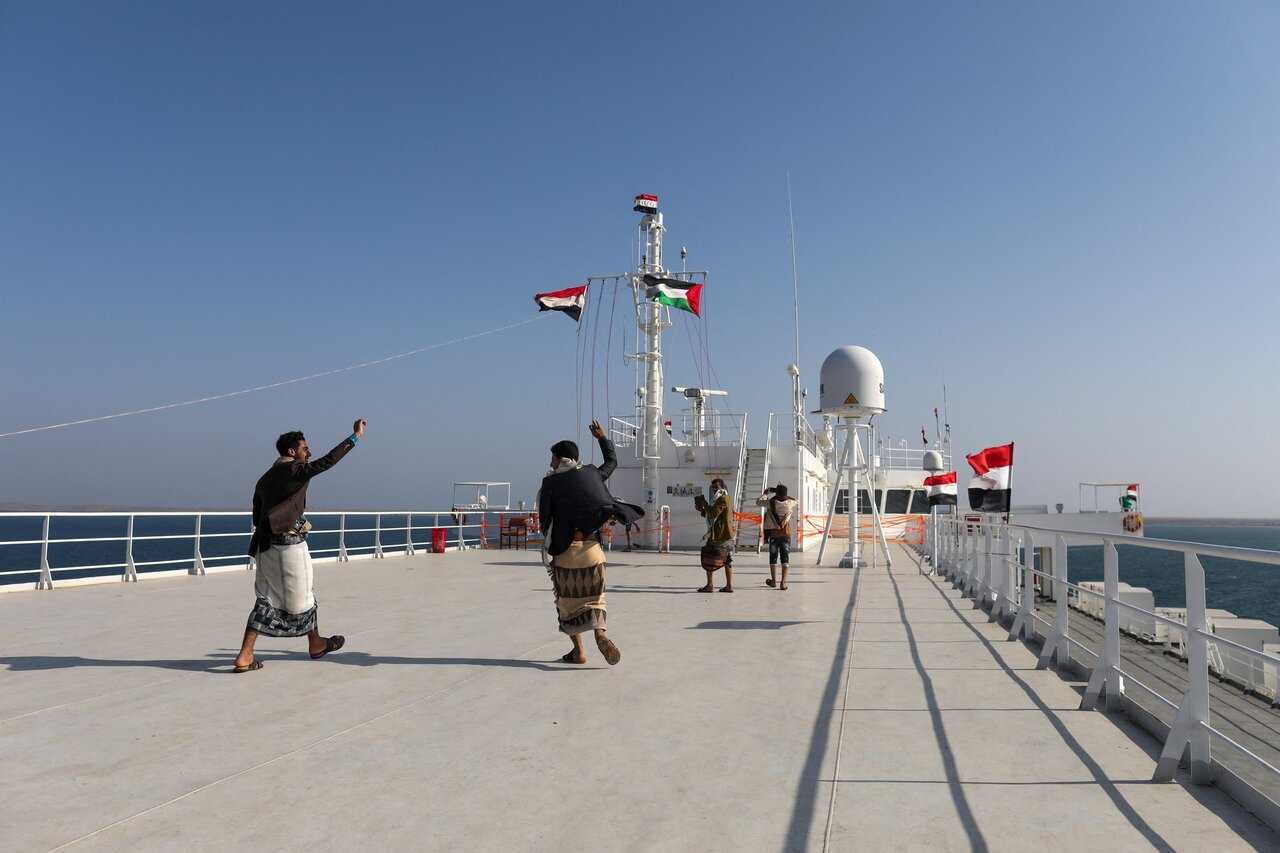
TEHRAN — The current link between the Strait of Hormuz and Bab al-Mandab is just a geographic connection between two maritime points.
It should be understood as the potential formation of a geo-economic deterrence system stretching from the Persian Gulf to the Red Sea.
For decades, one of the objectives of grand U.S. strategy has been to ensure freedom of movement in vital regions and to maintain the ability to control and manage the trade and energy routes on which the global economy depends.
The Persian Gulf region has been one of the most important of these vital areas.
In the late 1970s, U.S. National Security Adviser and strategic thinker Zbigniew Brzezinski spoke of an “arc of crisis” stretching from the Horn of Africa to South Asia, describing it as a zone of political fragility vulnerable to penetration and geopolitical exploitation.
Amid the Cold War, Brzezinski believed that the fragility of this region could allow the Soviet Union to expand its influence southward, threatening U.S. strategic interests and access to energy resources and maritime routes in the Indian Ocean and the Persian Gulf.
There is little doubt that the developments of 2026, the illegal U.S.-Israeli war against Iran, and its aftermath have once again underscored the strategic importance of this region.
If Afghanistan in the 1980s was important because of its land position among the U.S.-Soviet rivalry, Yemen in 2026 derives its significance from its potential ability to influence one of the most important trade and energy routes connecting Asia and Europe.
Against this backdrop, the advance of Ansarallah along Yemen’s western coast and its control of Mokha, Mayyun Island (Perim), and several other islands can be viewed as a shift in the balance of power across the regional system as a whole.
Given ongoing technological developments and the growing interdependence among states, critical connecting points within global economic networks have become sources of power in their own right.
Disrupting them, or simply threatening to do so, immediately affects energy, trade, insurance, and maritime transport.
The strategic importance of maritime chokepoints lies in the ability to exert influence over them, even without actually closing them. In practice, affecting the global economy does not require a complete closure of maritime routes.
It is enough to raise the level of risk, increase insurance costs, and force companies to alter their shipping routes for major strategic consequences to follow.
The advance of the Yemeni Armed Forces and their control over strategically vital areas overlooking Bab al-Mandab represent a dramatic shift in the regional balance of power.
The strategic value of what Ansarallah has achieved in Yemen derives not only from the geographic territory it now controls, but also from the fact that it now overlooks one of the “gateways” through which trade between East and West passes.
The “arc” of strategic chokepoints
The qualitative importance of Bab al-Mandab and the Strait of Hormuz stems from their role as part of the infrastructure of the international economy.
Modern globalization has not eliminated geography; rather, it has increased the value of certain vital locations by deepening dependence on maritime supply chains. In essence, control over, or even the slight ability to influence, the Straits of Hormuz and Bab al-Mandab represents both a direct military threat and a structural instrument of pressure on the global economy.
The developments unfolding after the unprovoked war against Iran point to a transition from the model of an “arc of crisis” described by Brzezinski to a contemporary model that could be called an “arc of strategic chokepoints.”
During the 1970s, the main source of U.S. concern was the collapse of political rulers and the rise of disorder within this region. Today, however, the more serious challenge lies not so much in the fragility of states as much as the ability of regional actors to influence the corridors that connect the global economy.
Under this new model, control of geography alone is no longer sufficient to measure power. The ability to influence points of transit and critical infrastructure has become an additional source of power.
This helps explain why Iranian policymakers place control of the Strait of Hormuz, along with establishing sovereign arrangements over it amid the aggression, ahead of the matter of changing Iran’s nuclear doctrine.
Ultimately, the current link between the Strait of Hormuz and Bab al-Mandab should not be understood simply as a geographic connection between two maritime points, but rather as the potential formation of a geo-economic deterrence system stretching from the Persian Gulf to the Red Sea.
If Iran and its allies succeed in consolidating this connection and reshaping a new deterrence system that is structurally different from the old one, it could force major powers to reconsider some of the strategic assumptions that have dominated Western thinking since the end of the Cold War.
This means a reevaluation in which military superiority alone is sufficient to guarantee the security of global trade and energy flows and to maintain dominance over West Asia's balance of power.
Leave a Comment